
Winter Lawn Care in Buffalo, NY: How to Prepare Your Lawn for Winter
Our winters don’t mess around. Lake-effect snow can sit on your yard for months. Whatever is under that snow, like wet leaves, tall grass, or a forgotten kiddie pool, can leave ugly dead patches by April.
This guide shows you how to prepare your lawn mowing for winter, what you can safely skip, and when it makes sense to call a pro.
Quick Answer: Winter lawn care in Buffalo, NY comes down to four jobs. Fertilize in fall, make your last mow before the ground freezes (usually mid-November to early December), clear every leaf, and protect your grass from snow mold and road salt. Finish before Buffalo’s first long stretch of snow cover.
Why Winter Lawn Care in Buffalo, NY Is Different
Buffalo grows cool-season grasses like Kentucky bluegrass and fine fescue. These grasses keep growing in the cool weeks of fall, right when most of us stop looking at the lawn. That gap is where problems start.
Two local things make winter lawn care here different from the generic tips you’ll find online.
Heavy clay soil: Many yards in Cheektowaga and West Seneca have thick clay soil that drains slowly. When wet clay freezes and thaws again and again, the ground can lift and press down hard (this is called compaction). That puts stress on grass roots, even while they’re asleep.
Lake-effect snow: Towns near Lake Erie, like Hamburg, can get earlier and heavier snow than inland suburbs. Snow is a good blanket for soil. But if grass goes under it wet, long, or covered in leaves, you may see snow mold in spring. That’s a fungus that shows up as gray or pink patches when the snow melts.
How to Prepare Your Lawn for Winter (Step-by-Step)
Want to know how to winterize your lawn? Follow these steps in order. The order matches the calendar, so you won’t be doing a job too early or too late.
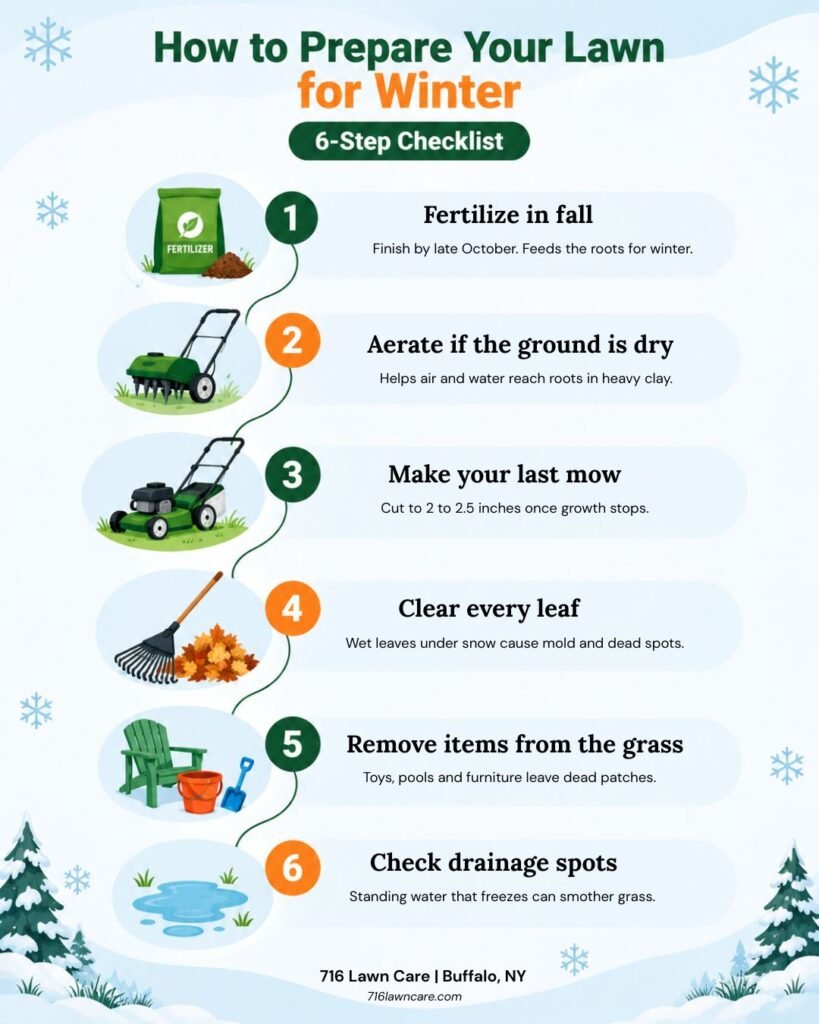
- Fertilize in fall (by late October): A fall feeding helps roots store energy for winter and green up faster in spring. If it’s already November, skip it. Fertilizer applied this late does very little.
- Aerate if the ground is dry enough: Aeration means pulling small plugs of soil out of the lawn so air and water can reach the roots. It’s most helpful on compacted clay. More on this below.
- Make your last mow: Keep mowing until the grass stops growing. See the next section for the right height.
- Clear every leaf: Wet leaves under snow block light and trap moisture. That leads to mold and dead spots.
See our fall lawn cleanup guide. - Pick up anything left on the grass: Kiddie pools, toys, and patio furniture will leave dead patches by spring.
- Walk your drainage spots. Standing water that freezes on top of your lawn can smother the grass underneath. If you see a low spot that pools water, make a note now. It’s much easier to fix before the ground freezes.
drainage solutions
Your Last Mow: Lawn Care Before Winter Hits
Don’t pick a date on the calendar. Pick a sign: mow until the grass stops growing. In most Buffalo winters, that lands between mid-November and early December.
See our lawn mowing tips.
For your last one or two cuts:
- Lower your mower slowly to about 2 to 2.5 inches.
- Don’t cut shorter than that. Short grass has less energy stored for winter.
- Don’t mow tall, wet grass right before snow. This is one of the most common causes of snow mold in Western New York.
Should You Aerate or Overseed Before Winter?
Aeration: Do it if the ground is still dry enough to walk on without leaving footprints. If fall rain or early snow has already soaked your clay soil, wait until spring. Aerating soggy ground can make compaction worse.
Overseeding: This means adding grass seed to thin spots. Seed needs 4 to 6 weeks of decent growing weather before frost. If it’s November, that window has closed, so wait for spring.
Not sure whether to seed or lay sod? Compare hydroseeding vs. sod or find best time to install sod installation.
Can You Keep Grass Green in Winter?
Not really. And that’s okay.
Cool-season grass goes dormant (it “sleeps”) when the soil stays below about 40°F. Winter grass turns tan or brown under the snow. That’s normal and doesn’t mean it’s dead.
What you can do is help it wake up thick and green in spring:
- Feed it in fall.
- Keep it clear of leaves and clutter.
- Protect it from road salt and plow damage.
Lawn Care During Winter: What to Do After the Snow Falls
Once the snow arrives, your lawn needs very little. A few simple habits go a long way:
- Stay off frozen or frosty grass. Footsteps can snap the blades.
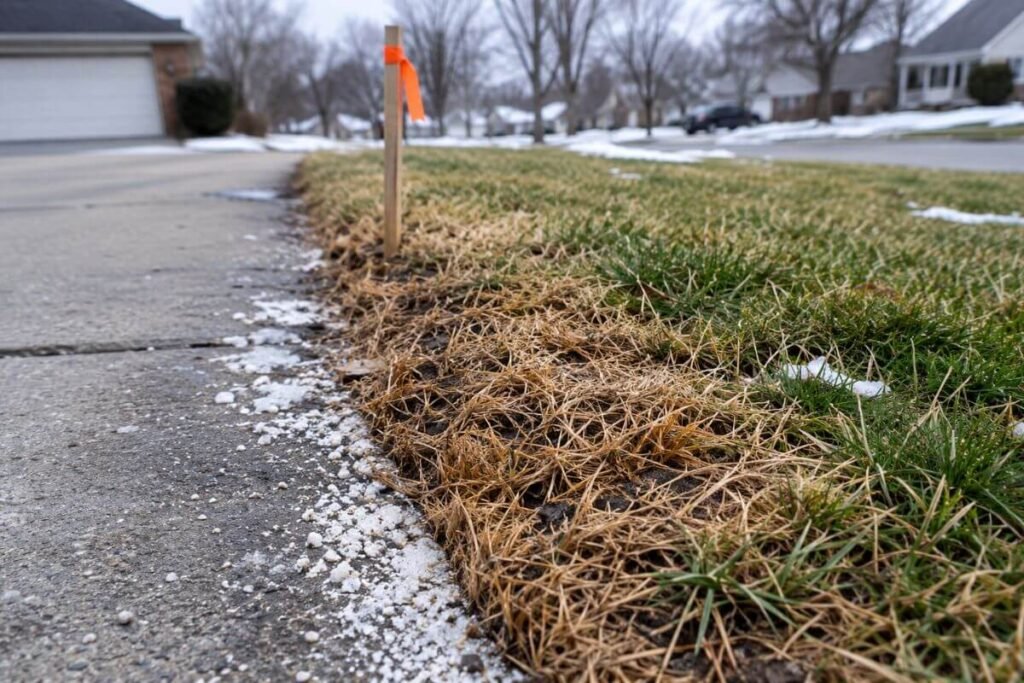
- Don’t pile salty snow on the lawn. Salt dries out grass and can burn the roots.
- Use lawn-safe or pet-safe ice melt near grass edges.
- Mark plow edges with stakes so the blade doesn’t tear up your turf.
- Check for pooling water during winter thaws, and note the spots for spring.
Winter Landscaping in Buffalo, NY: Protect Your Beds, Shrubs and Edges
Your lawn isn’t the only thing that takes a beating. A little prep protects the rest of your yard too:
- Mark garden edging, low walls, and sprinkler heads before the plow comes.
- Keep heavy snow and salty slush away from small shrubs.
- Clear dead leaves out of garden beds so mold doesn’t build up.
- Trim back overgrown edges now so they don’t flatten under heavy snow.
Planning changes for spring? See our landscaping design ideas for Buffalo.
Winter Lawn Maintenance: DIY or Hire a Pro?
| Task | DIY Is Usually Fine | Consider a Pro |
|---|---|---|
| Final Mow and Leaf Clearing | Yes, with a mower and a rake or leaf blower. | Large lot, or if the work is physically hard |
| Fall Fertilizing | Yes, with a store-bought spreader. | When you want a professional-grade blend matched to your soil. |
| Aeration | Possible, but rental machines can be heavy. | Heavily compacted clay, or you want it done in one visit |
| Drainage Problems | Rarely, it needs equipment and experience | Recommended. |
Not sure where your lawn stands?
Book a seasonal lawn maintenance visit with 716 Lawn Care and we’ll give you a clear quote based on your lot and soil.
What Happens If You Skip Fall and Winter Lawn Care
You won’t lose your whole lawn. But a slow, patchy spring is likely:
- Leaves left under snow smother grass and cause snow mold.
- Long grass mats down under the snow, which slows spring green-up.
- Compacted soil stays compacted all winter, so roots struggle to recover.
- Frozen standing water can kill the grass in that spot.
These are the exact problems our crews fix every April, and they’re much easier to prevent in October.
Winter Lawn Care Tips for Buffalo, Hamburg, Cheektowaga and Kenmore
Timing shifts a little depending on your neighborhood.
- Hamburg and lakeshore towns: Snow can come early and heavy. Aim to finish your checklist by early to mid-November.
- Cheektowaga and nearby suburbs: You may have a slightly longer window, but clay compaction is a bigger issue. Put aeration first if the ground is still workable.
- Kenmore: Yards are often smaller and shadier, so soil dries slowly in fall. Make sure no wet leaves are sitting on the grass before the first snow.
Planning a plow service? See when to sign up for snow plowing in Buffalo.
716 Lawn Care serves Cheektowaga, Kenmore, and Hamburg, Amherst, Tonawanda, West Seneca, and Orchard Park, our crews adjust the timing to match your property.
Get Winter Lawn Care in Buffalo, NY Done Before the First Snow
FAQ
Does grass grow in the winter in Buffalo, NY?
No. Cool-season grass goes dormant once the soil stays below about 40°F, usually by late November or December. It starts growing again when the soil warms up in spring.
How do I winterize my lawn?
Fertilize by late October, make your last mow at 2 to 2.5 inches, clear all leaves, and pick up anything left on the grass. Do these before the first long stretch of snow.
Should I fertilize my lawn before winter in Buffalo?
Yes, if you can finish by late October. It helps roots store energy and speeds up spring green-up. After that, skip it.
Can I keep grass green in winter?
Not in Buffalo. Grass turns tan while it’s dormant, which is normal. Fall feeding and good prep help it come back green in spring.
Does road salt kill grass?
It can. Salt dries out grass and damages roots, especially along driveways and sidewalks. Use lawn-safe ice melt and don’t pile salty snow on the lawn.
Can I aerate my lawn in November in Buffalo?
Only if the ground is dry enough to walk on without leaving footprints. If it’s soaked from rain or snow, wait until spring.
What is snow mold and how do I prevent it?
Snow mold is a fungus that leaves gray or pink patches on grass after the snow melts. Prevent it by mowing at the right height and clearing all leaves before the first lasting snow.
How short should I cut my grass for the last mow?
Lower your mower slowly to about 2 to 2.5 inches. Cutting shorter leaves less stored energy in the roots.
Is it too late to overseed in fall?
If there are fewer than 4 to 6 weeks of decent growing weather before frost, wait for spring. A rushed fall attempt rarely works.